










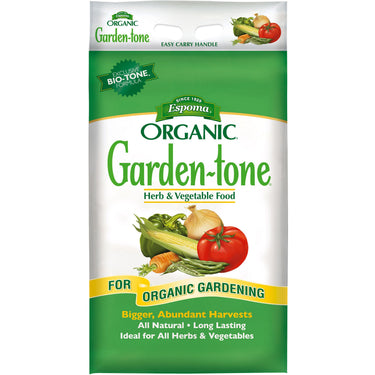


Espoma® Organic® Garden-tone® 3-4-4
Garden-tone is the ultimate choice for feeding all your favorite herbs and vegetables! It’s a rich blend of the finest natural and organic ingredients, enhanced with humates and beneficial microbes. No sludges or fillers are ever used, and because it’s made in our state-of-the-art solar-powered manufacturing facility, consistency and quality are guaranteed.
Key Benefits:
-
#1 choice for growing vegetables for over 60 years
-
Promotes abundant harvests of flavorful herbs and vegetables
-
100% natural and organic approved
-
Long-lasting, slow-release feeding
-
Safe for people, pets, and planet
products.product.pickup_availability.unavailable
Product Details
NPK Breakdown:
-
Nitrogen (N) - 3%: Supports leafy growth and overall plant vigor
-
Phosphorus (P) - 4%: Enhances root development and flowering
-
Potassium (K) - 4%: Improves overall plant health and stress resistance
For Use On:
All herbs and vegetables such as:
Hardy (cool season) crops:
Broccoli, Brussels sprouts, Cabbage, Collards, English peas, Kale, Kohlrabi, Leeks, Mustard greens, Parsley, Radish, Spinach, Turnip
Semi-hardy crops for early spring or fall:
Beets, Carrot, Cauliflower, Celery, Chinese cabbage, Endive, Irish potatoes, Lettuce, Radicchio, Rutabaga, Salsify, Swiss chard
Summer crops (plant after danger of frost):
Beans, Corn, Cucumber, Eggplant, Melons, Okra
When to Use:
-
Mix into the garden soil prior to planting.
-
Seedlings/Transplants: 7–10 days after planting.
-
Established Plants: Monthly, from May through August.
-
Herbs will only require feeding at the time of planting or after a large harvest.
How Much to Use:
Soil Preparation for Vegetable Garden:
-
Apply 3 lbs. per 50 square feet and work into the top 4 to 5 inches of soil. When possible, mix with organic matter such as compost, humus, or peat moss.
Feeding Vegetables and Tomatoes:
-
Single Plants: Apply up to 1/3 cup per plant.
-
Rows: Apply 1-1/3 cups on each side per 5 ft. of row or 10 lbs. on each side per 100 ft. of row.
Potted Plants:
-
New Plants: When preparing soil for new plants, thoroughly mix 2 cups of Garden-tone into each cubic foot of potting soil.
-
Established Plants: Sprinkle 1.5 tsp. of Garden-tone per 4 inches of pot diameter onto the soil along the outer edge of the pot. Water thoroughly.
Herbs:
-
In the Garden: Use 1 tbsp. per plant.
-
In Containers: Use half the rate for potted plants as above.
How to Apply:
-
For Individual Plants: Sprinkle around the drip line of the plant.
-
For Row Crops: Sprinkle evenly on each side of the row.
-
Do not allow plant food to contact the main stem or foliage of the plant.