



Merlin Hellebore
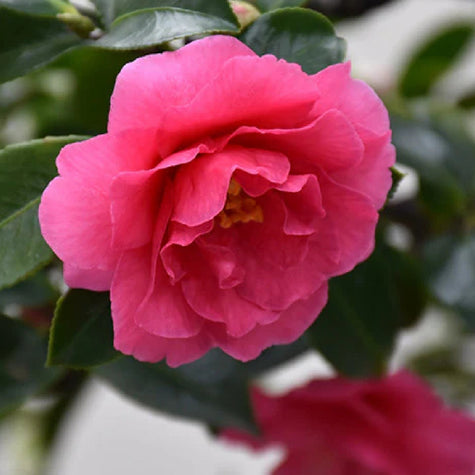
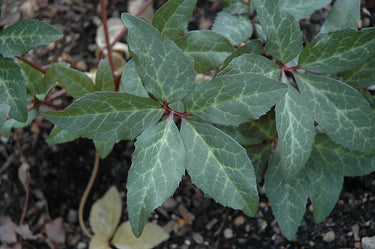
Beautiful pink flowers with cream rays and chartreuse centers mature to a deep cranberry; handsome gray-green foliage has interesting cream veins, and deep red stems; this very showy plant is excellent for borders where protected from winter winds
 Mature Height: 15 inches
 Mature Width: 24 inches
 Light: Partial Shade, Shade
 Merlin Hellebore
$24.99
/
Merlin Hellebore
$24.99
/

Check availability at your local Armstrong Garden Center
products.product.pickup_availability.unavailable
Details
Merlin Hellebore is an herbaceous evergreen perennial with an upright spreading habit of growth. Its medium texture blends into the garden, but can always be balanced by a couple of finer or coarser plants for an effective composition.
This is a relatively low maintenance plant, and should be cut back in late fall in preparation for winter. Deer don't particularly care for this plant and will usually leave it alone in favor of tastier treats. It has no significant negative characteristics.
Merlin Hellebore is recommended for the following landscape applications:
- Mass Planting
- Rock/Alpine Gardens
- Border Edging
- General Garden Use
- Naturalizing And Woodland Gardens
Features
Merlin Hellebore features showy nodding pink cup-shaped flowers with creamy white overtones and chartreuse eyes at the ends of the stems from late winter to early spring. Its attractive serrated oval compound leaves remain grayish green in color with distinctive creamy white veins throughout the year. The fruit is not ornamentally significant. The dark red stems are very colorful and add to the overall interest of the plant.
Care
Planting & Growing
Merlin Hellebore will grow to be about 15 inches tall at maturity, with a spread of 24 inches. When grown in masses or used as a bedding plant, individual plants should be spaced approximately 18 inches apart. Its foliage tends to remain dense right to the ground, not requiring facer plants in front. It grows at a medium rate, and under ideal conditions can be expected to live for approximately 5 years.
This plant does best in partial shade to shade. It does best in average to evenly moist conditions, but will not tolerate standing water. It is not particular as to soil pH, but grows best in rich soils. It is somewhat tolerant of urban pollution, and will benefit from being planted in a relatively sheltered location. This particular variety is an interspecific hybrid, and parts of it are known to be toxic to humans and animals, so care should be exercised in planting it around children and pets. It can be propagated by division; however, as a cultivated variety, be aware that it may be subject to certain restrictions or prohibitions on propagation.
| Deer Resistant | |
|---|---|
| Family | |
| Flower Color | |
| Bloom Time | |
| Foliage Color | |
| Genus | |
| Growth Rate | |
| Hardiness Zone | |
| Landscape Uses | |
| Light Needs | |
| Mature Height | |
| Mature Width | |
| Prune Time | |
| Water Needs |